India’s pension system is once again in the spotlight. With the introduction of a ₹75,000 standard deduction under the new tax regime, many retired employees receiving pension under the Employees’ Pension Scheme (EPS-95) are asking an important question:
Do EPS-95 pensioners qualify for the ₹75,000 standard deduction?
The answer is important because it directly affects how much tax pensioners may need to pay each year. Recent tax discussions and expert clarifications have brought some relief and clarity for retirees.
In this article, we break down the EPS-95 pension rules, taxation, the ₹75,000 deduction, eligibility conditions, and what pensioners should do while filing income tax returns.
Understanding EPS-95 Pension
The Employees’ Pension Scheme (EPS-95) was introduced in 1995 and is managed by the Employees’ Provident Fund Organisation (EPFO). It provides monthly pension benefits to employees working in the organised sector after retirement.
Under this scheme:
- A portion of the employer’s PF contribution goes into the pension fund.
- Employees become eligible for pension after at least 10 years of service.
- The normal pension age is 58 years.
The pension amount is calculated using the formula:
Pension = (Pensionable Salary × Pensionable Service) ÷ 70.
Because the pensionable salary is capped at ₹15,000, the pension amount generally remains limited under the scheme.
Current Status of EPS-95 Pension
Millions of retirees across India depend on EPS-95 pensions for their monthly income. However, pensioners’ associations have long demanded higher minimum pensions and additional benefits like Dearness Allowance (DA).
Currently:
- The minimum EPS pension remains ₹1,000 per month, which has been unchanged since 2014.
- More than 80 lakh pensioners receive benefits under EPS-95.
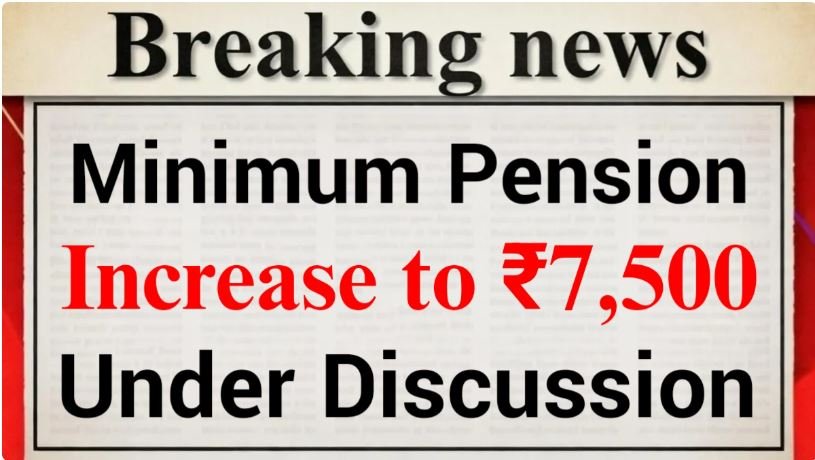
Due to rising living costs, pensioners have been urging the government to increase the minimum pension to at least ₹7,500 per month with DA benefits, but a final decision is still pending.
What Is the ₹75,000 Standard Deduction?
In recent budget changes, the government increased the standard deduction to ₹75,000 under the new tax regime for salaried individuals and pensioners.
Standard deduction means:
- A fixed amount is automatically deducted from income
- Tax is calculated only on the remaining amount
- No bills or proof are required
For example:
| Particular | Amount |
|---|---|
| Annual pension income | ₹4,50,000 |
| Standard deduction | ₹75,000 |
| Taxable income | ₹3,75,000 |
This helps reduce the taxable income and ultimately lowers the tax burden.
Are EPS-95 Pensioners Eligible for the ₹75,000 Deduction?
Yes — in most cases, EPS pension can qualify for the standard deduction because pension income is generally treated as “income from salary” under the Income Tax Act.
The logic behind this rule is simple:
- Pension is paid for services rendered during employment.
- Since it originates from the employer-employee relationship, it is taxed like salary.
Because of this classification, EPS pensioners may claim the ₹75,000 standard deduction while filing income tax returns under the new tax regime.
However, confusion sometimes arises due to how pension types are classified.
Why Confusion Exists Among Pensioners
Some pensioners believe that EPS pension is treated as “income from other sources”, which would make them ineligible for the standard deduction.
But tax experts clarify that:
- Regular pension received by the retiree is taxed under salary income.
- Family pension (received by spouse after death of pensioner) is taxed under income from other sources.
Family pension only allows a smaller deduction — typically 1/3 of the pension or ₹25,000 (whichever is lower).
This difference is the main reason for the confusion.
How the ₹75,000 Deduction Benefits EPS Pensioners
The higher standard deduction offers several advantages to retirees.
1. Lower Tax Liability
A deduction of ₹75,000 reduces taxable income directly, which can reduce or eliminate tax for many retirees.
2. Simpler Tax Filing
No documentation or investment proof is required to claim the deduction.
3. Higher Disposable Income
Lower taxes mean pensioners retain more of their income for living expenses, healthcare, and savings.
Example Calculation for EPS Pension Tax
Let’s understand this with a simple example.
| Particular | Amount |
|---|---|
| Annual EPS pension | ₹5,00,000 |
| Standard deduction | ₹75,000 |
| Taxable income | ₹4,25,000 |
Under the new tax regime, tax will be calculated only on ₹4.25 lakh instead of ₹5 lakh.
For many pensioners with lower income, this deduction can even bring taxable income below the tax-free threshold.
Other Tax Benefits Available to Pensioners
Apart from the ₹75,000 standard deduction, pensioners can also benefit from several other tax provisions depending on the tax regime chosen.
Under the Old Tax Regime
- Section 80C investment deductions
- Health insurance deduction (80D)
- Senior citizen higher exemption limit
Under the New Tax Regime
- Standard deduction of ₹75,000
- Lower tax rates
- Simplified structure with fewer deductions
Each pensioner should evaluate which tax regime results in lower tax.
Future Expectations for EPS-95 Pensioners
The issue of pension reform continues to be debated.
Key demands from pensioners include:
- Increase minimum pension to ₹7,500
- Dearness Allowance for inflation adjustment
- Better medical support
- Improved social security for retirees
While the government has acknowledged these demands, a comprehensive reform plan has not yet been announced.
Final Thoughts
For millions of retirees, the EPS-95 pension remains a vital source of financial support after retirement. The introduction of the ₹75,000 standard deduction under the new tax regime provides meaningful relief by reducing taxable income.
Although confusion exists about the eligibility of EPS pension for this deduction, tax experts generally confirm that regular pension income qualifies for the benefit because it is treated as salary income.
As tax rules and pension policies evolve, pensioners should stay updated and consult tax professionals when filing their returns to ensure they receive all available benefits.
Disclaimer:
This article is for informational purposes only. Tax rules and pension policies may change. Pensioners should consult a qualified tax advisor or check official government notifications before making financial decisions.